What ashwagandha is
Ashwagandha (Withania somnifera) is a shrub whose root, and sometimes leaf, is used in Ayurvedic tradition. In supplements it appears as powder or extract, often inside capsules, tablets and gummies. The NCCIH ashwagandha overview gives a balanced, plain-language summary and is the source we suggest over marketing pages.
As with most herbs, "traditional" does not equal "proven." The better question is what well-designed studies in people show, and how closely that matches the product on your shelf.
You may also see names such as Indian ginseng or winter cherry. They refer to the same plant. Whatever the name, a label should still tell you the part of the plant used, the extract type if any, and the amount per serving. When those details are missing, comparison with research is guesswork.
What the research does and does not show
NCCIH notes that people take ashwagandha for stress and sleep, but that the research is limited and that the evidence is not enough to draw firm conclusions. Studies tend to be small, short and use different preparations. A finished gummy may contain a very different amount than anything tested.
- Study durations are usually short, so long-term effects are unclear.
- Extracts differ, so one study cannot be applied to every product.
- Many products list the herb without a clear amount.
Because of this, we describe ashwagandha in a product only as an ingredient the brand lists, never as a promise.
Another point is the placebo effect. Studies on mood, stress and sleep depend heavily on self-reported feelings, which are easily influenced by expectation. Good trials control for that, but many small ones do not, and that makes cautious language the honest choice.
Safety cautions worth taking seriously
Ashwagandha may interact with thyroid medication and with sedatives or sleep aids, according to the brand's own cautions and general guidance. Public health sources also flag that it is not recommended during pregnancy, and there have been reports of liver problems in some users. Anyone with a thyroid condition, liver concerns, or an autoimmune condition should talk to a clinician before use.
If you take any regular medicine, a short conversation with your pharmacist is worth the time. Our overview of herbal supplements and medication interactions explains how to prepare for that conversation, and who should skip herbal gummy supplements lists the groups most often advised to avoid them.
Quality is a separate concern. Because supplements are not approved before sale, purity and strength can vary from brand to brand, and independent third-party testing is one way companies can show they check. Soda Steel does not publish such test results on the pages we reviewed.
Finally, timing matters when other medicines are involved. If you are scheduled for surgery, tell your surgical team about every supplement, since some herbs affect how sedation and other drugs behave.
How it appears in Soda Steel
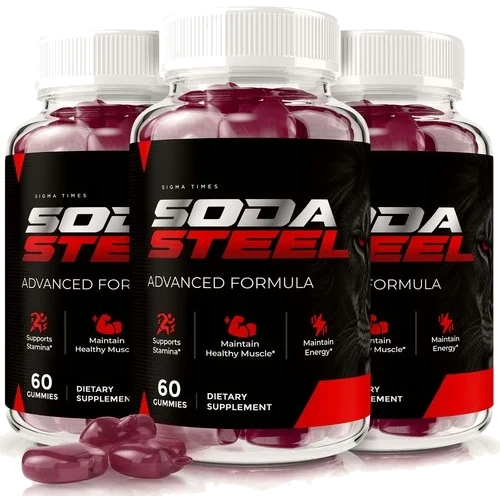
Ashwagandha is one of six listed ingredients in Soda Steel™, alongside Tongkat Ali, L-Citrulline, Zinc, Maca Root and Tribulus Terrestris. No amounts are published, so we cannot say how much of any herb is in two gummies. The brand page states the product is not for anyone under 18 or for pregnant or breastfeeding women, and that Ashwagandha may interact with thyroid and sedative medication.
You can see the whole formula on our ingredients list and read the broader context in Soda Steel explained.
The brand page also says people with medical conditions or on regular medication should ask a clinician first, which is sensible advice for any product with several active herbs. When several herbs and a mineral are combined, it becomes harder to tell which one is behind any change you notice, and harder for a professional to judge interactions.
A cautious way to decide
Before trying any product with this herb, write down every medicine and supplement you take, and review it with a professional. Start by confirming that the product has a reachable company, a clear label and clear return terms. The NCCIH guidance on using dietary supplements wisely is a handy checklist.
Our editorial standards explain why we avoid promises. If you still want to look, you can view Soda Steel pack options and read the refund conditions at checkout, since they were not shown on the page we reviewed.
A good habit is to keep a short list of your supplements on your phone and update it whenever something changes. It makes appointments faster and safer.
Not medical advice. This article is general information. Soda Steel™ is a dietary supplement and not a treatment for any condition. Talk to your clinician. This is an independent web guide; see our editorial standards.